

What a 1,270-Mile EV Road Trip Actually Taught Me About Used-EV Readiness
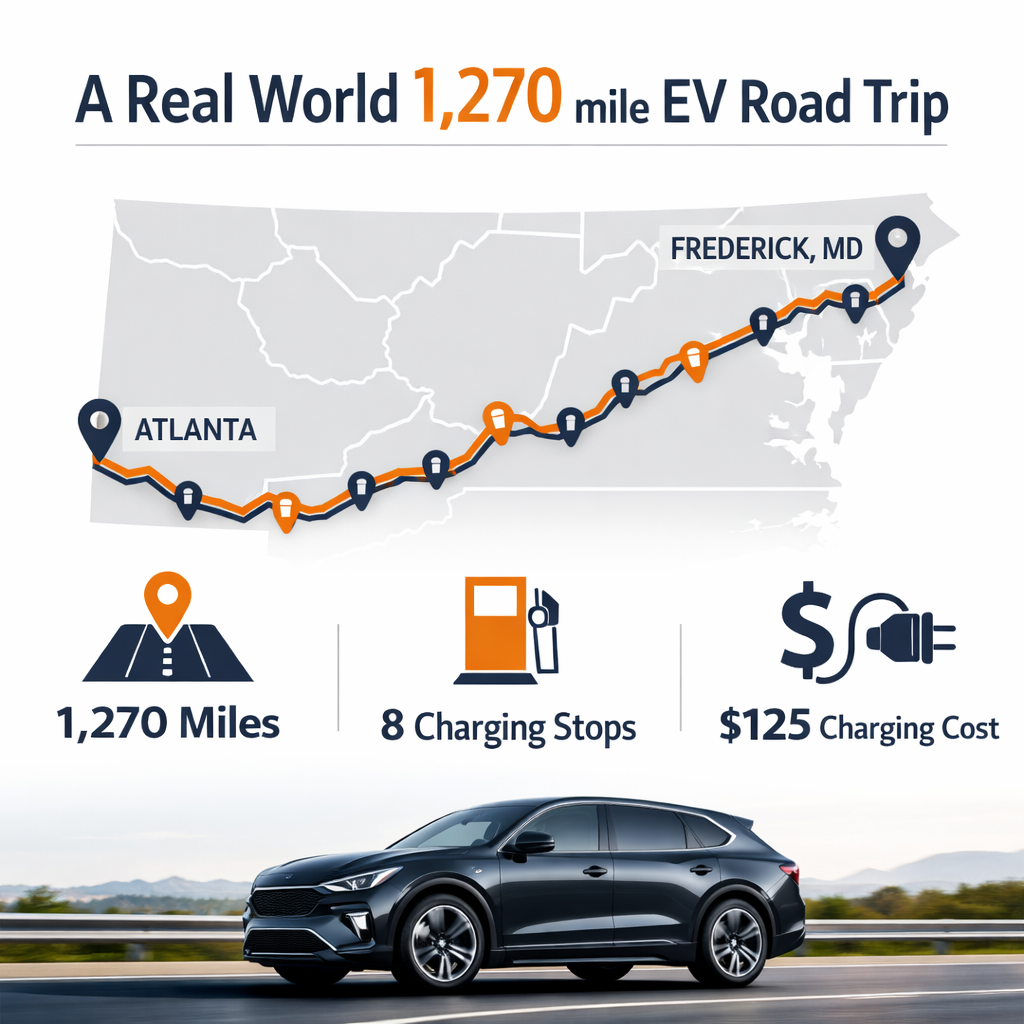
I took my 2026 Toyota bZ Limited on its first real road trip this week.
Atlanta to Frederick, Maryland and back.
- 1,270 miles round trip
- 8 charging stops
- $125 total spent on charging
And honestly, the biggest surprise was not that the vehicle made the trip.
The surprise was how normal the trip felt after the first stop or two.
The Charging Experience Was Easier Than Expected
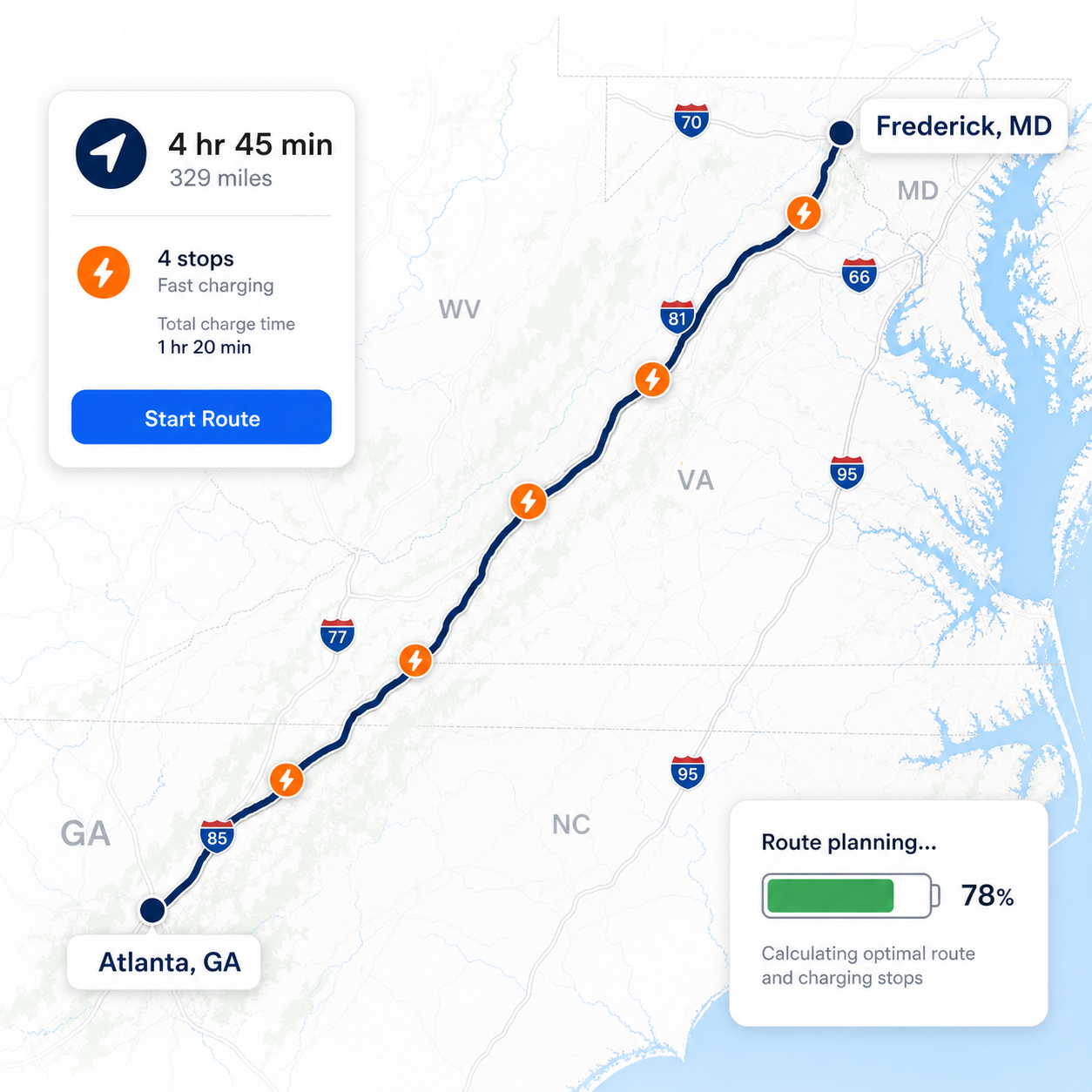
I used Apple Maps synced with the battery technology in the vehicle, and the experience was seamless.
The charging stops were automatically added along the route with no confusion and no real range anxiety. Most stops took the vehicle from roughly 20% to 95% in 30 minutes or less, depending on the power of the charging station.
I used multiple charging networks, including Tesla, Electrify America, and PlugShare locations.
That matters because most customers are not thinking about EV ownership in theory. They are thinking about whether the vehicle will fit into their real life.
On this trip, it did.
The Tech Stack Made the Drive Easier
I also ran Waze simultaneously for traffic rerouting and alerts only.
And yes, that included the police alerts.
Apple Maps handled the battery-aware routing. Waze handled real-time traffic awareness. That combination worked extremely well.
I also used the active cruise feature in the BZ for much of the highway driving. It gave the trip a semi-autopilot feel and made the long-distance drive much easier.
I stopped overnight on the drive up, but on the return trip, I completed the full 11-hour drive in one shot.
The charging stops added some extra time, but they also changed the rhythm of the trip. I stopped more often, stretched, walked around, reset, and arrived less tired than I expected.
The Cost Difference Was Hard to Ignore
Here is the part that stood out from an ownership-cost standpoint.
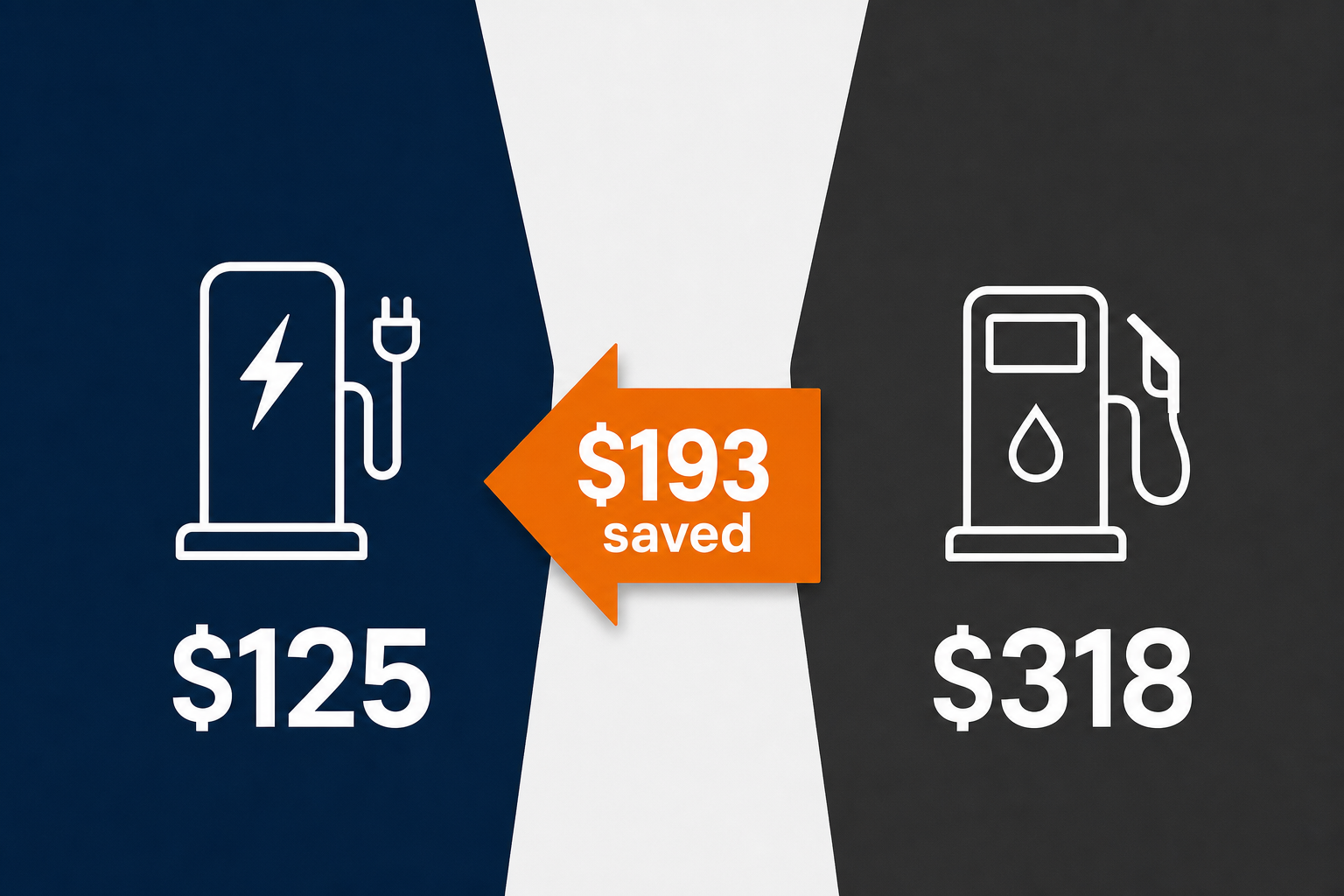
The full EV road trip cost me $125 in charging.
My 4Runner gets about 18 MPG max. At $4.50 per gallon, that same 1,270-mile trip would have used roughly 70.6 gallons of fuel.
That would put the gas cost around $318.
So compared to the 4Runner, the EV saved roughly $193 on this one trip alone.
That does not mean every EV trip is perfect. It does not mean every customer should buy one. But it does challenge one of the biggest assumptions people still carry about EV ownership.
The real-world operating cost difference can be meaningful.
The One Thing That Still Needs Work
The only part I still want to improve is syncing charging stops with better food options.
I tried to line up chargers with restaurant locations, but that was harder than expected. Some charging locations were convenient. Others were not ideal if you wanted a real meal during the stop.
That is where the EV experience still has room to improve.
Charging speed matters. Network access matters. But the experience around the charger matters too.
Get the Profitable Pre-Owned Brief
Weekly market signals for used-car operators—built to help you read demand, protect gross, and make better inventory decisions.
Subscribe to the PPO BriefWhy This Matters for Dealers
A lot of the public conversation around EVs is still based on assumptions from three to five years ago.
But the ownership experience keeps improving quietly in the background.
Navigation is better. Charging networks are broader. Vehicles are smarter. Driver-assist technology is reducing fatigue. And customers who actually live with these vehicles often come away with a different perspective than people who only talk about them from the outside.
That is important for used-car operators.
Because the EV conversation at the dealership level cannot only be about battery size, range, incentives, or wholesale risk.
It also has to be about customer confidence.
The Operator Takeaway
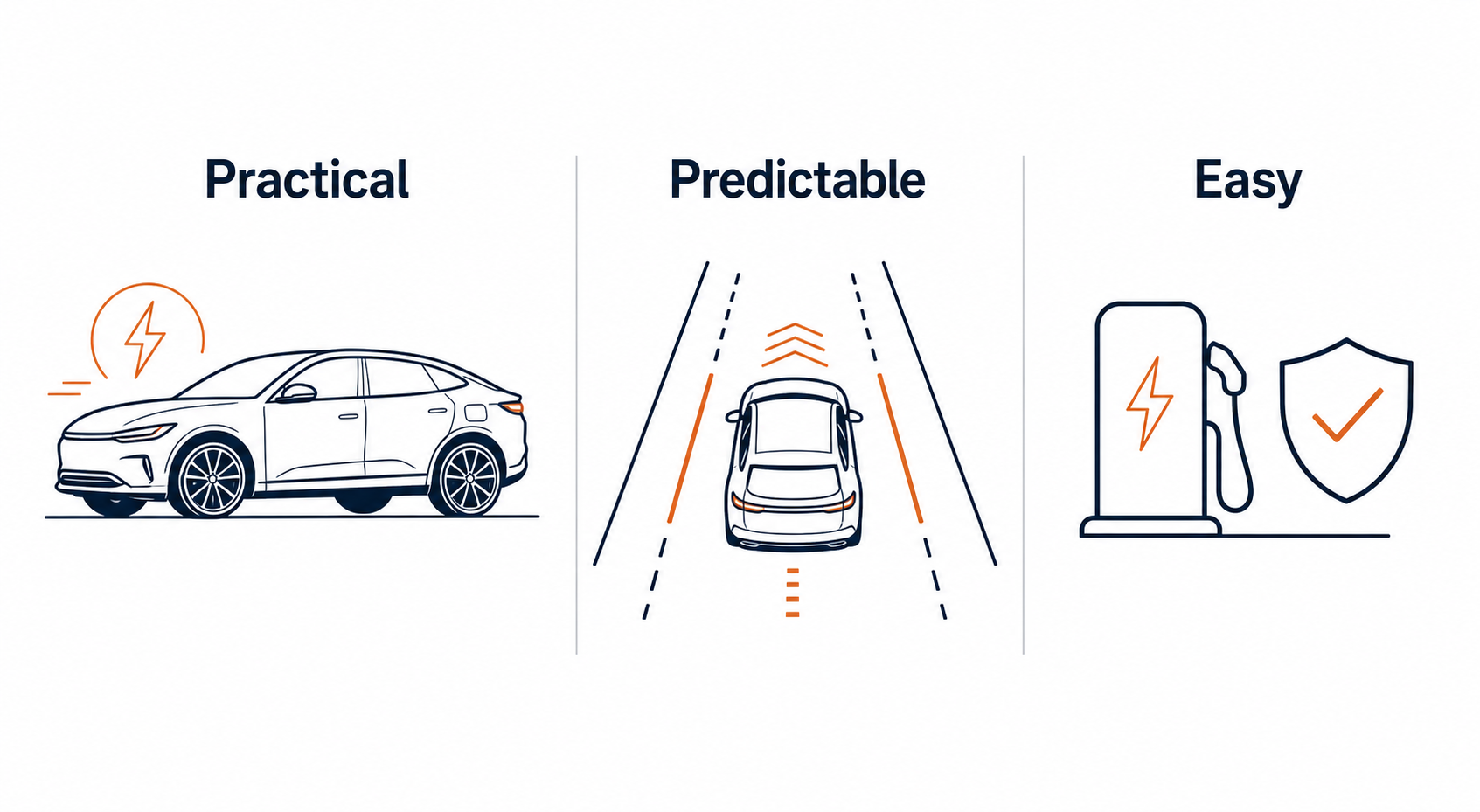
Customers do not need EVs to be perfect.
They need them to feel practical, predictable, and easy enough to fit into normal life.
This trip showed me that the gap between perception and real-world usability is getting smaller fast.
For dealers, that creates both a challenge and an opportunity.
The challenge is that outdated EV assumptions can still slow down demand, merchandising, and sales confidence.
The opportunity is that real ownership stories can help close that gap.
Used-EV readiness is not just about stocking the car.
It is about understanding the ownership experience well enough to explain it with confidence.