
Used EVs Are Not Just an Auction Opportunity. They Are an Operating Test.
The story is not that used EVs are getting cheaper.
The story is that used EVs are becoming an operator test.
That is what dealers should really watch.
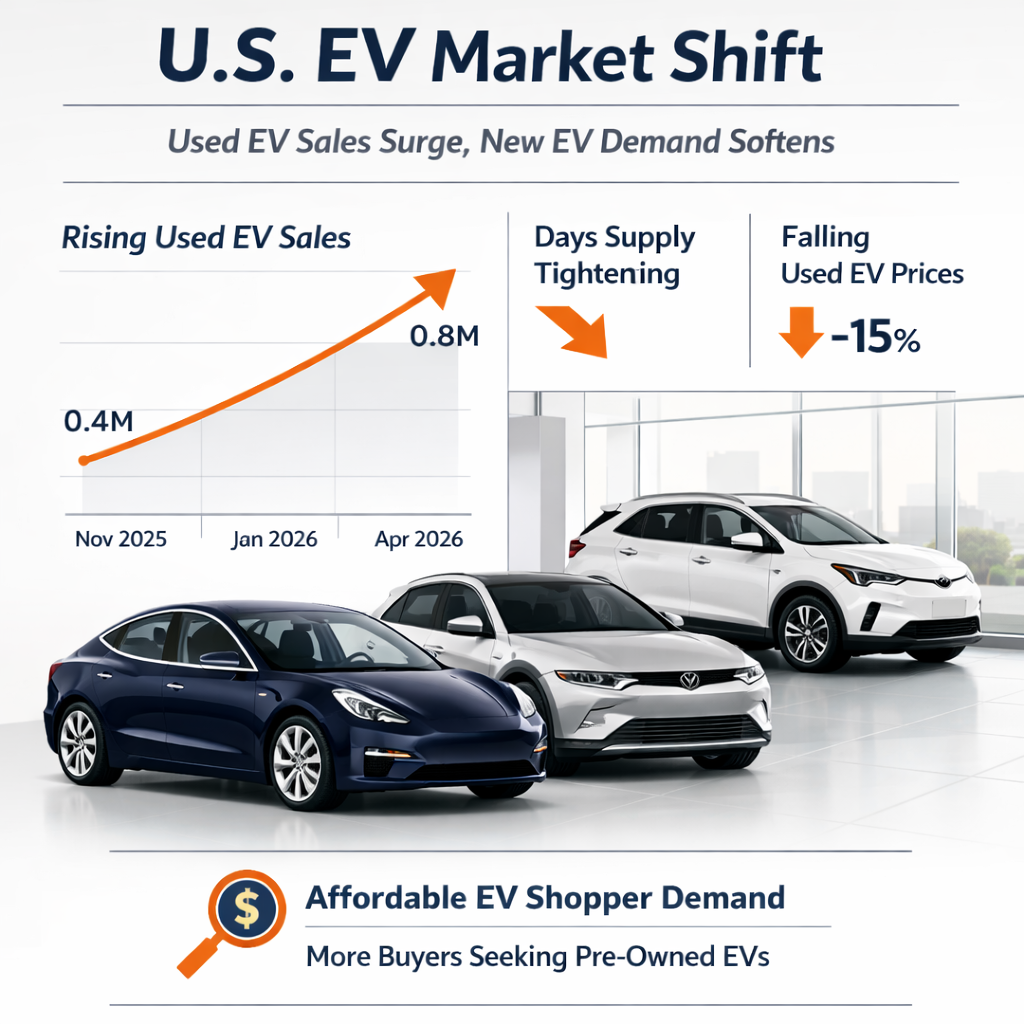
Car Dealership Guy recently published a strong breakdown on used EV affordability and the auction opportunity hiding in plain sight. The data points are hard to ignore. Used-EV supply is building. Some EVs are sitting well below contract residual value. Used-EV sales momentum is improving. Wholesale EV values have moved higher. Used-EV days supply is tighter than many dealers may assume.
The surface-level takeaway is easy:
There may be used EV buying opportunities at the auction lane.
But the PPO takeaway is different.
The opportunity is not just buying the EV.
The opportunity is knowing which EV deserves to be bought, how it should be merchandised, and how the customer should understand the value before the vehicle ever becomes an aging problem.
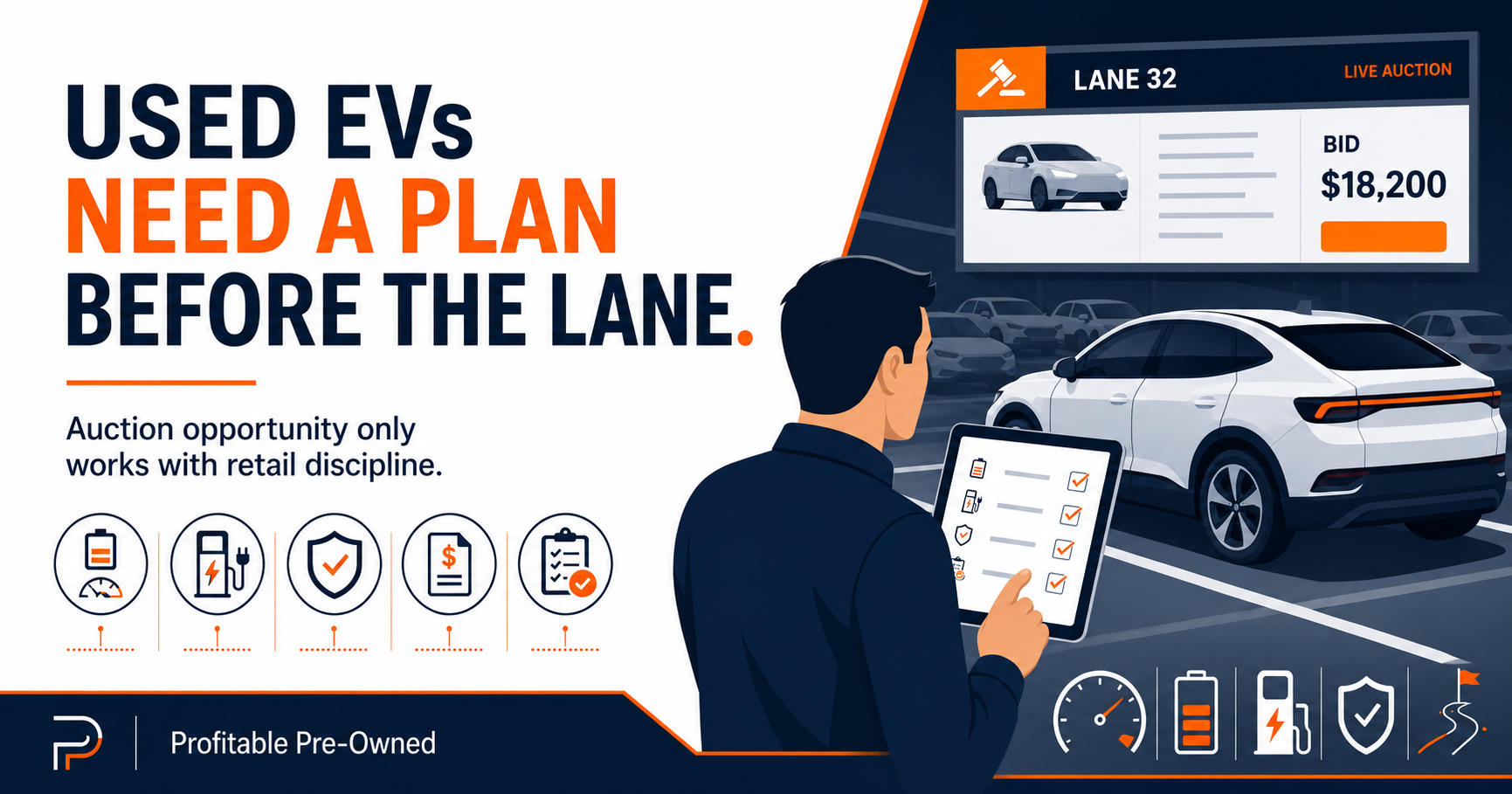
PPO Takeaway: Used EVs are not just an acquisition opportunity. They require a complete operating plan: buy box, pricing logic, merchandising story, customer education, and exit strategy.
The auction opportunity is real, but it is not automatic
Used EV depreciation has created a new kind of affordability story.
For some customers, a lightly used EV may offer a lower payment, lower fuel cost, reduced maintenance exposure, and a more attractive entry point than a new EV or comparable gas vehicle.
That sounds like an opportunity.
But dealers need to be careful.
A cheaper EV on the lane is not automatically a good retail unit.
The wrong store sees depreciation and gets scared.
The aggressive store sees lower wholesale prices and starts chasing units.
The disciplined store builds a buy box.
That is the difference.
Used EVs do not retail like traditional used cars
Used EVs come with a different set of customer questions.
The shopper is not just asking:
- Is this the right price?
- How many miles are on it?
- Has it been serviced?
- Can I get approved?
They are also asking:
- Can I charge it at home?
- What range do I really need?
- How much battery warranty is left?
- What happens if the battery degrades?
- How does the payment compare to a gas vehicle?
- What will it cost me to own?
- Is this still a good value compared to a new EV with incentives?
Those questions have to be answered before the objection.
If a used EV lands on your lot and the team cannot explain the value in 30 seconds, the car is already at risk.
The used EV decision starts before the bid
This is where many stores miss.
They look at the auction opportunity before they build the retail story.
That is backwards.
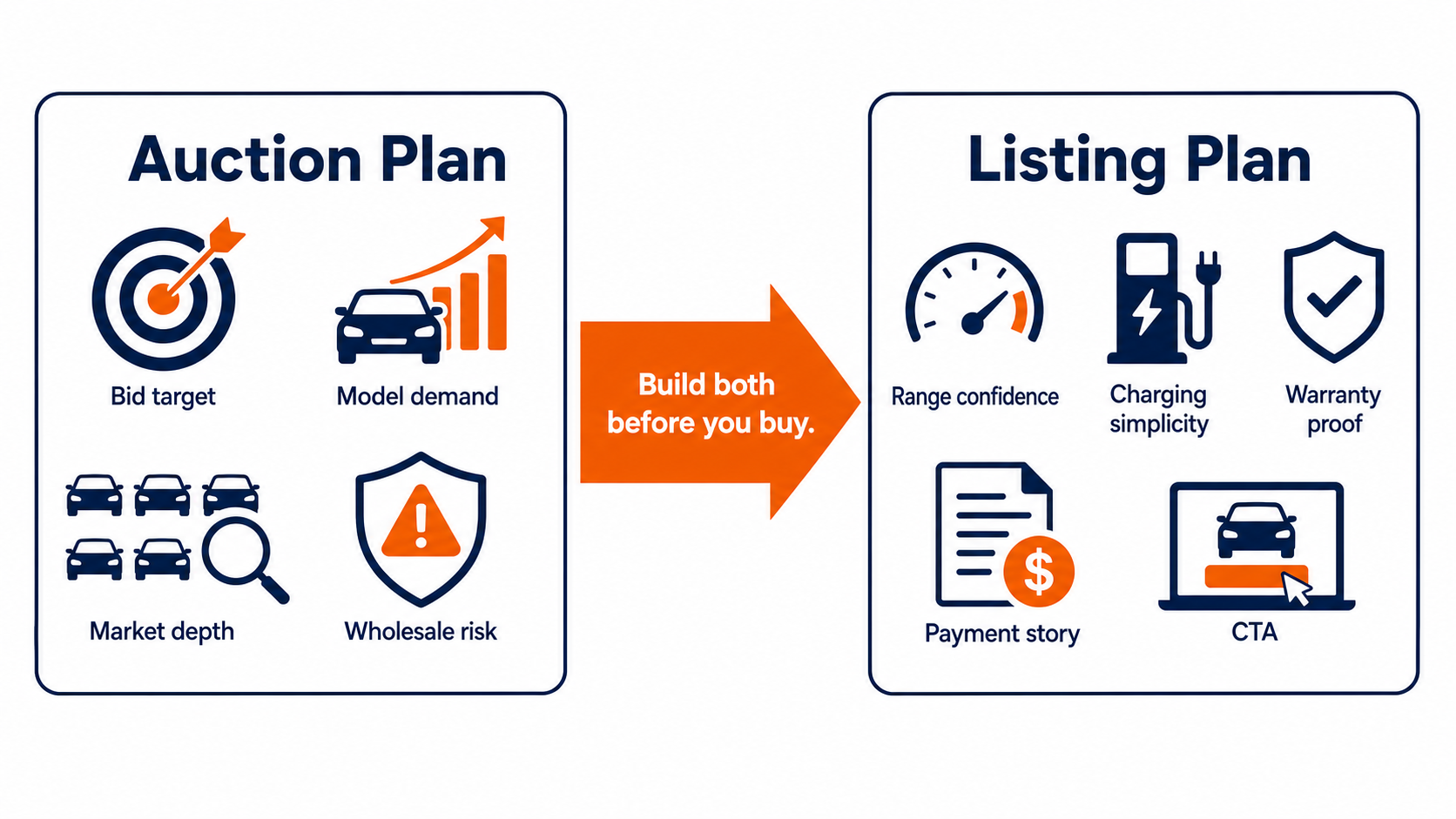
The auction plan and the listing plan need to be built together.
Before a store buys a used EV, the team should already know:
- Who is the likely buyer?
- What range story will be used?
- What charging explanation will be provided?
- What warranty coverage remains?
- How does the payment compare against a gas vehicle?
- How does it compare against a new EV?
- What is the pricing exit plan if demand shifts?
- What proof will be shown on the VDP?
That is the operating discipline.
The best used EVs are not always the cheapest ones.
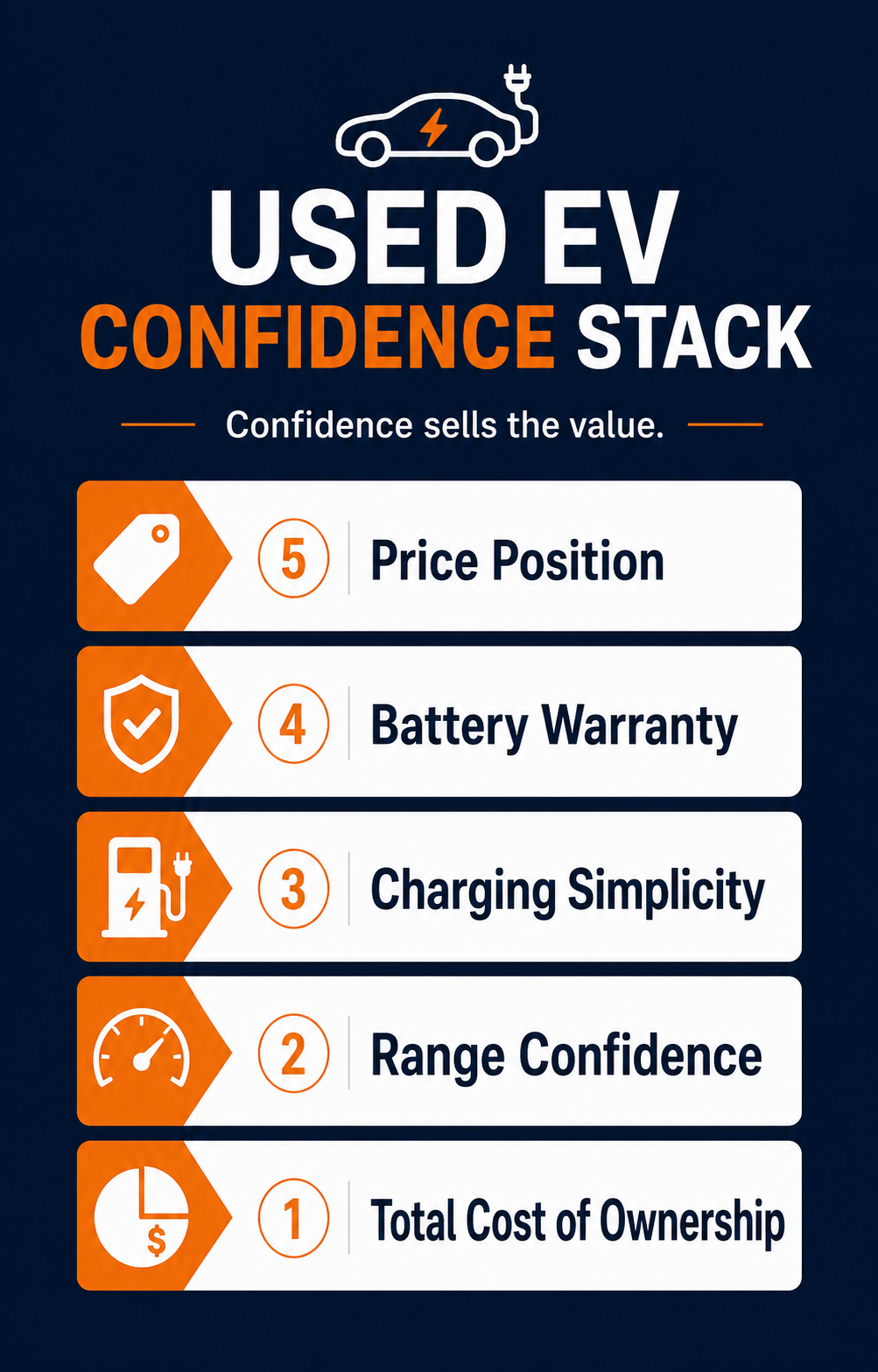
They are the ones where the store can connect price, range, warranty, charging, payment, and buyer fit into a simple value story.
Affordability has to be explained, not assumed
Used EV affordability is not always obvious to the customer.
A dealer may see the wholesale opportunity. A buyer may only see risk.
That gap has to be closed through merchandising and education.
The listing should not simply say:
2023 EV, low miles, priced to sell.
That is not enough.
The listing should help the shopper understand why the vehicle makes sense:
- Battery warranty remaining
- Estimated range for typical driving
- Charging options explained in plain language
- Home charging versus public charging use case
- Payment comparison against similar ICE or hybrid options
- Maintenance and ownership cost story
- Reconditioning and inspection details
- Why this specific used EV is a smart value
The customer does not just need a lower price.
They need confidence.
The VDP is where the used EV either gets trusted or ignored
For a traditional used car, strong photos, condition, price position, and history matter.
For a used EV, those things still matter, but the trust bar is higher.
The VDP has to do more work.
It has to reduce fear before the customer submits the lead.
A strong used EV VDP should answer:
- What is the practical range?
- What battery warranty remains?
- What charging equipment is included?
- What charging setup does the customer need?
- Has the vehicle been inspected for EV-specific concerns?
- How does this used EV compare to a new EV payment?
- What type of driver is this vehicle best suited for?
If those answers are missing, the unit may sit even if the price looks attractive.
That is why used EVs require more than market-based buying.
They require confidence-based merchandising.
Download The Used EV Operator Playbook
Used EVs can be a strong opportunity, but only if the store has a disciplined plan for buying, pricing, merchandising, educating, and exiting the vehicle.
The Used EV Operator Playbook gives dealers a practical framework for deciding which EVs to buy, how to position them, and how to avoid turning affordability into aging inventory.
The PPO used EV buy box
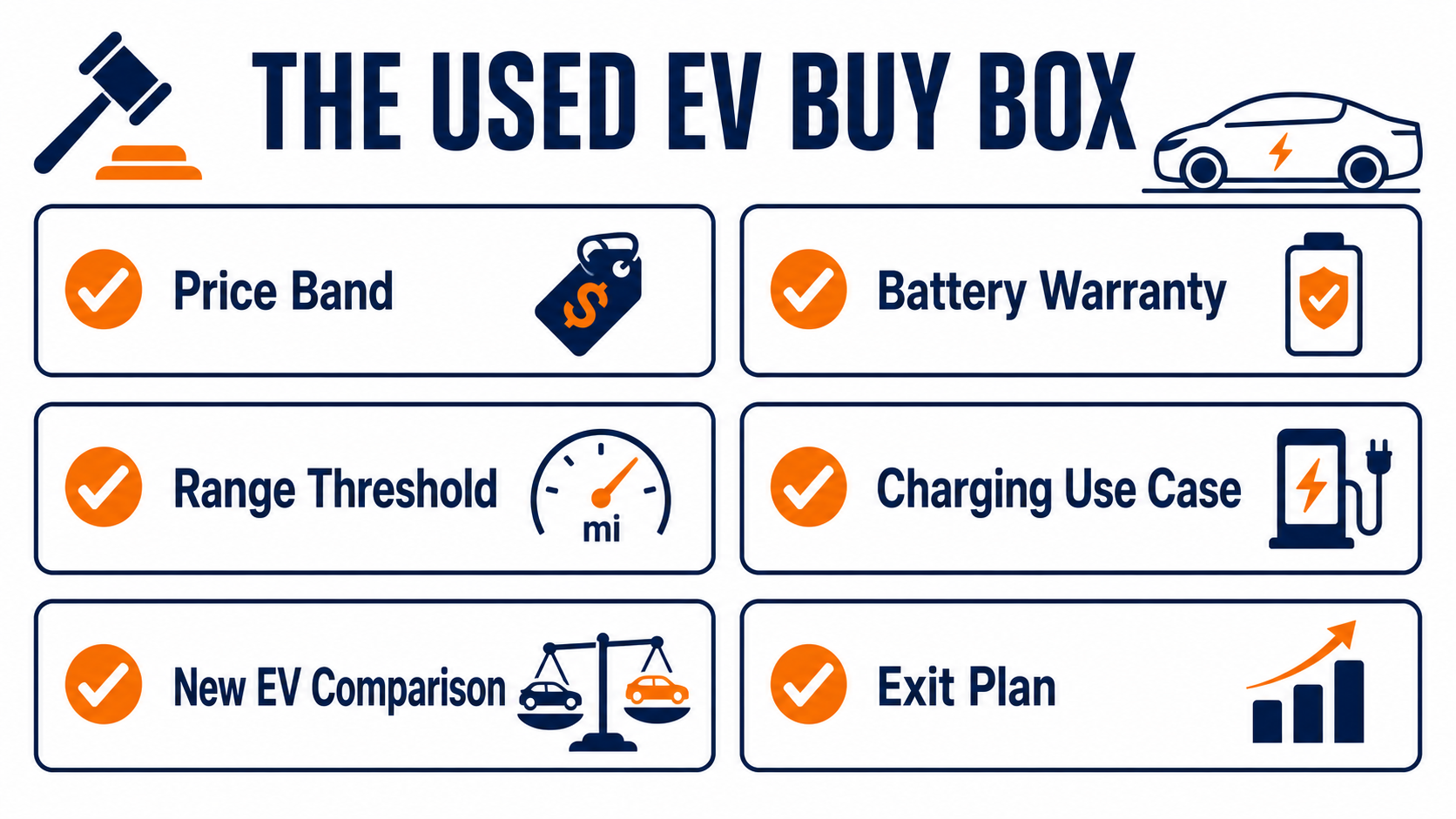
A used EV buy box does not need to be complicated.
But it does need to be disciplined.
At a minimum, dealers should define:
- Price band: Where does the used EV become affordable enough to create a real payment advantage?
- Mileage range: What mileage level still supports confidence, warranty value, and retail velocity?
- Battery warranty status: What coverage remains and how will it be explained?
- Range threshold: What range works for the local buyer profile?
- Charging use case: Is this best for a home-charging customer, commuter, urban driver, or second-car buyer?
- Market depth: How many similar units are available locally?
- New EV comparison: Does the used EV still make sense against incentives on new EVs?
- Exit plan: What is the decision point if the vehicle does not generate activity?
Without that discipline, a store can easily confuse a cheap buy with a good buy.
Education is not optional
Used EVs expose a weakness in many retail processes.
The customer needs more education, but the sales process often assumes they already understand the product.
That creates friction.
The salesperson needs to know how to explain range, charging, warranty, tax credit confusion, ownership costs, and buyer fit without turning the conversation into a technical lecture.
The manager needs to know whether the vehicle belongs in inventory before the store owns it.
The merchandising team needs to know which trust elements must appear on the listing.
The pricing manager needs to know when the EV is a value story and when it is a risk story.
That is why used EVs are an operator test.
They reveal whether the store has a connected process from acquisition to retail.
The auction plan and the customer plan have to match
A dealer can win the bid and still lose the retail battle.
That happens when the store buys the EV based on discount but merchandises it like every other used car.
The better approach is to connect the auction plan and customer plan before the vehicle is purchased.
Ask before the bid:
- What customer are we buying this for?
- What question will this customer ask first?
- What fear do we need to remove?
- What proof belongs on the VDP?
- What payment story makes this vehicle easy to understand?
- What is the exit point if the market turns?
That is the difference between opportunistic buying and disciplined inventory management.
The bottom line
Used EVs may be an opportunity hiding in plain sight.
But the opportunity is not automatic.
Dealers should not just chase used EV affordability.
They should build the operating system around it.
- Buy with discipline.
- Merchandise with confidence.
- Educate before the objection.
- Price against the customer’s real alternatives.
- Exit before the market moves against you.
The used EV opportunity starts before the lane.
It continues on the SRP.
It gets validated on the VDP.
And it either wins or loses depending on whether the customer trusts the value story.
That is the PPO angle.
Do not just buy the used EV.
Build the plan before you buy it.
Operator question: Before your store buys a used EV, can the team clearly explain the range, charging, warranty, payment, and total cost-of-ownership story?
Or are you buying the discount first and figuring out the retail story later?
Get the weekly used-car operating signal
The PPO Brief is built for dealers, GMs, used-car directors, buyers, inventory managers, and operators who want sharper market signals and practical used-car strategy.
Sources
- Car Dealership Guy News, “Used EVs, affordability, and the auction opportunity hiding in plain sight,” June 28, 2026. https://news.dealershipguy.com/p/used-evs-affordability-and-the-auction-opportunity-hiding-in-plain-sight