
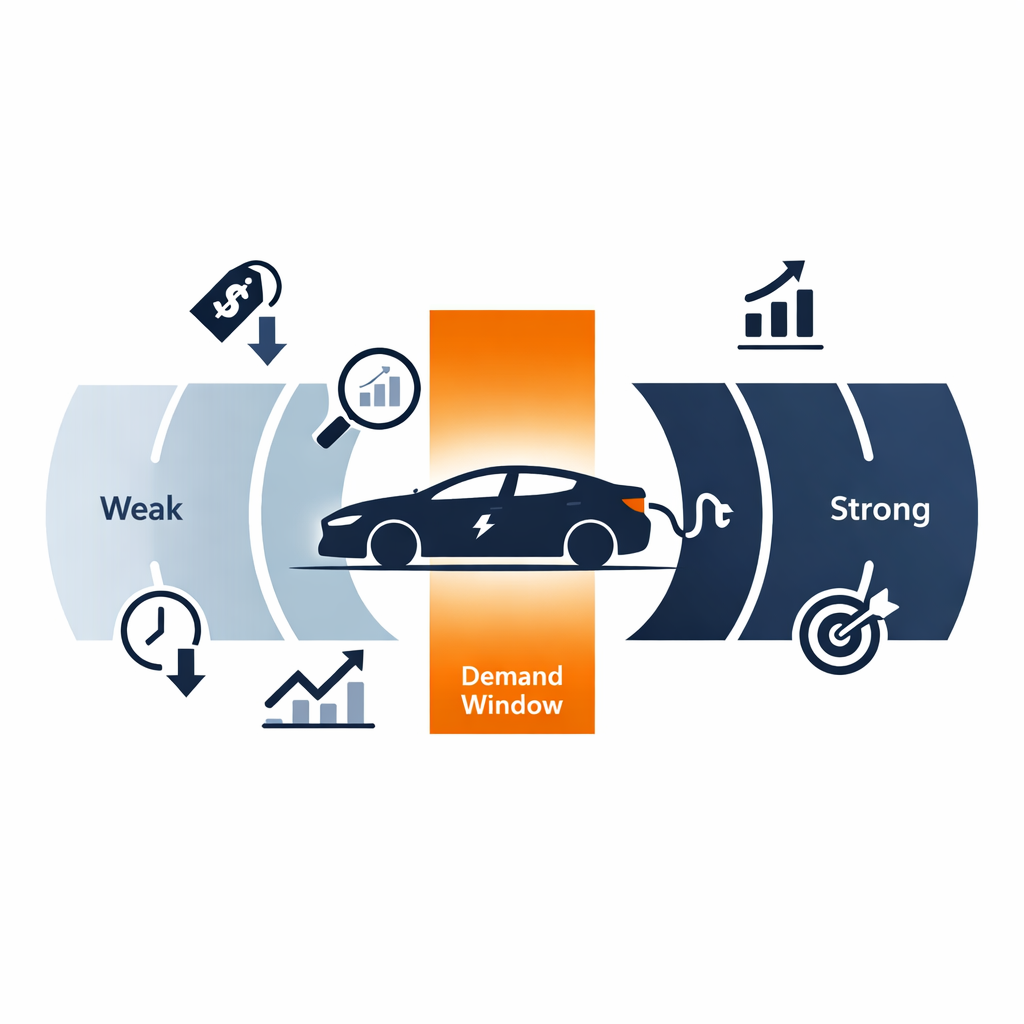

EVs Don’t Have a Pricing Curve. They Have a Demand Window.
Most dealers still manage EV pricing like ICE pricing.
That is the mistake.
With ICE inventory, pricing usually works on a curve. Drop the price a little, improve the value equation a little, and demand tends to respond gradually.
EVs do not behave that way.
They behave more like a demand window.
You are either inside the range where the buyer sees the vehicle as competitive, understandable, and low enough risk to act… or you are invisible.
That is why so many stores feel like they are “close” on EV pricing but still are not getting movement.
The problem is not always that the unit is overpriced.
The problem is that it is not positioned inside the demand window.
EVs Are Not Always a Gross Problem
One of the biggest misconceptions in the market is that EVs fail because they cannot hold gross.
That is not consistently true.
In real dealership performance, many EVs hold gross just fine when they are bought correctly, priced decisively, and positioned properly for the buyer.
The bigger issue is not always front-end profitability.
It is the time risk created when the unit misses the market window.
That distinction matters.
If a vehicle can hold gross when it sells, then the issue is not that the category is broken.
The issue is that execution is too loose.
The Real EV Risk Is Time
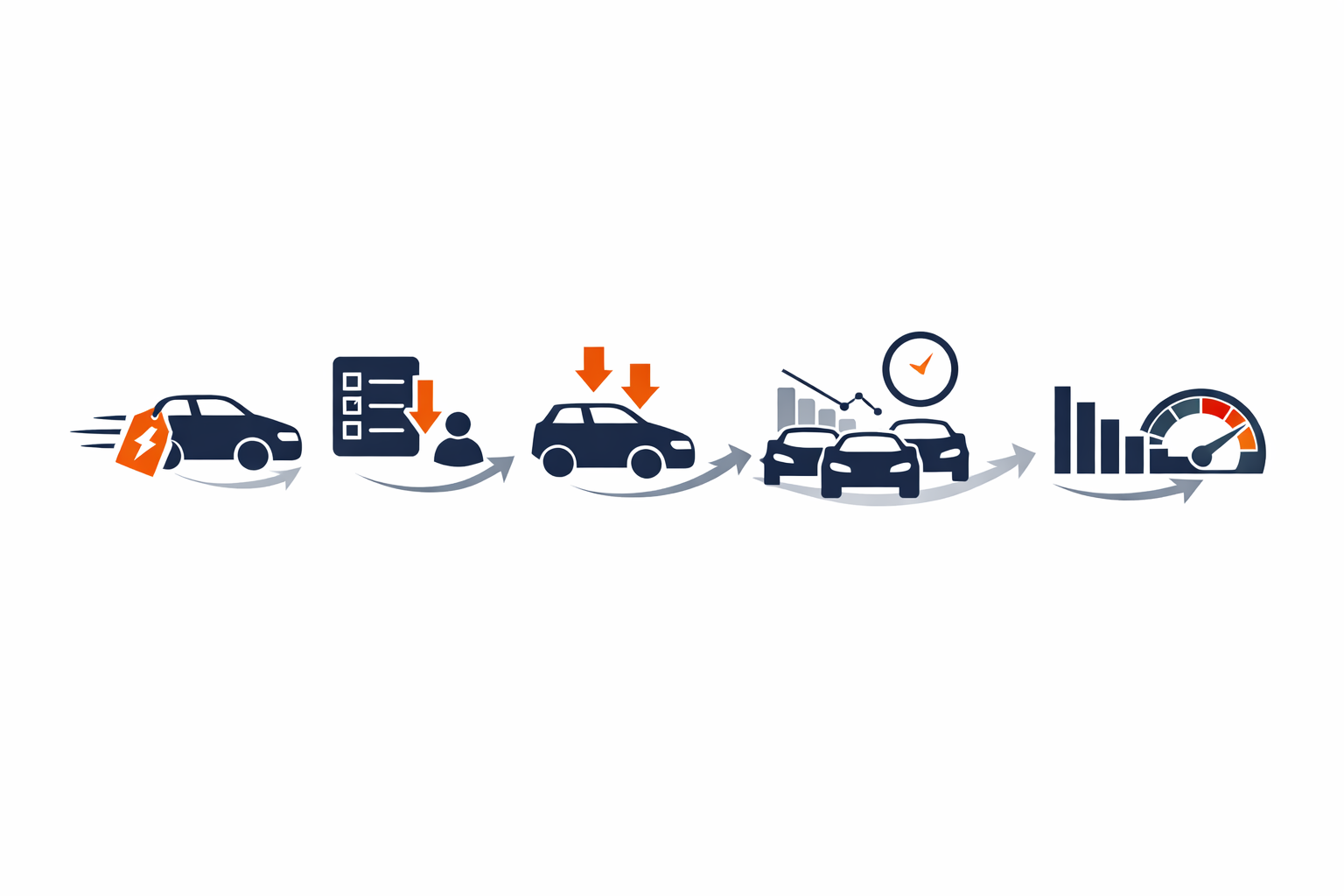
Most stores feel EV pain through aging, not just through margin.
That usually looks like this:
- The unit gets attention, but not enough conversion
- price reductions begin in small steps
- the listing does not answer the buyer’s real concerns
- days in stock rise
- confidence in the unit starts to drop internally
At that point, the vehicle has already started to decay as an asset.
This is why EVs often feel frustrating to operators.
They may not be failing because gross is weak.
They may be failing because the unit never entered the demand window early enough to convert while the story was still fresh.
Why Small Price Changes Often Do Not Work
This is where many EV strategies break down.
A store sees low activity and starts adjusting the price in small increments. Three hundred dollars here. Five hundred dollars there.
That feels disciplined.
But in EV retail, small moves often do nothing.
Why?
Because the issue is not that the vehicle needs a minor improvement in value perception.
The issue is that the unit is still outside the window where the buyer sees it as compelling, versus other EV options, especially Tesla and the most visible used-EV alternatives in the market.
That means the car is not losing because it is slightly off.
It is losing because it is still invisible.
The Core EV Liquidity Band
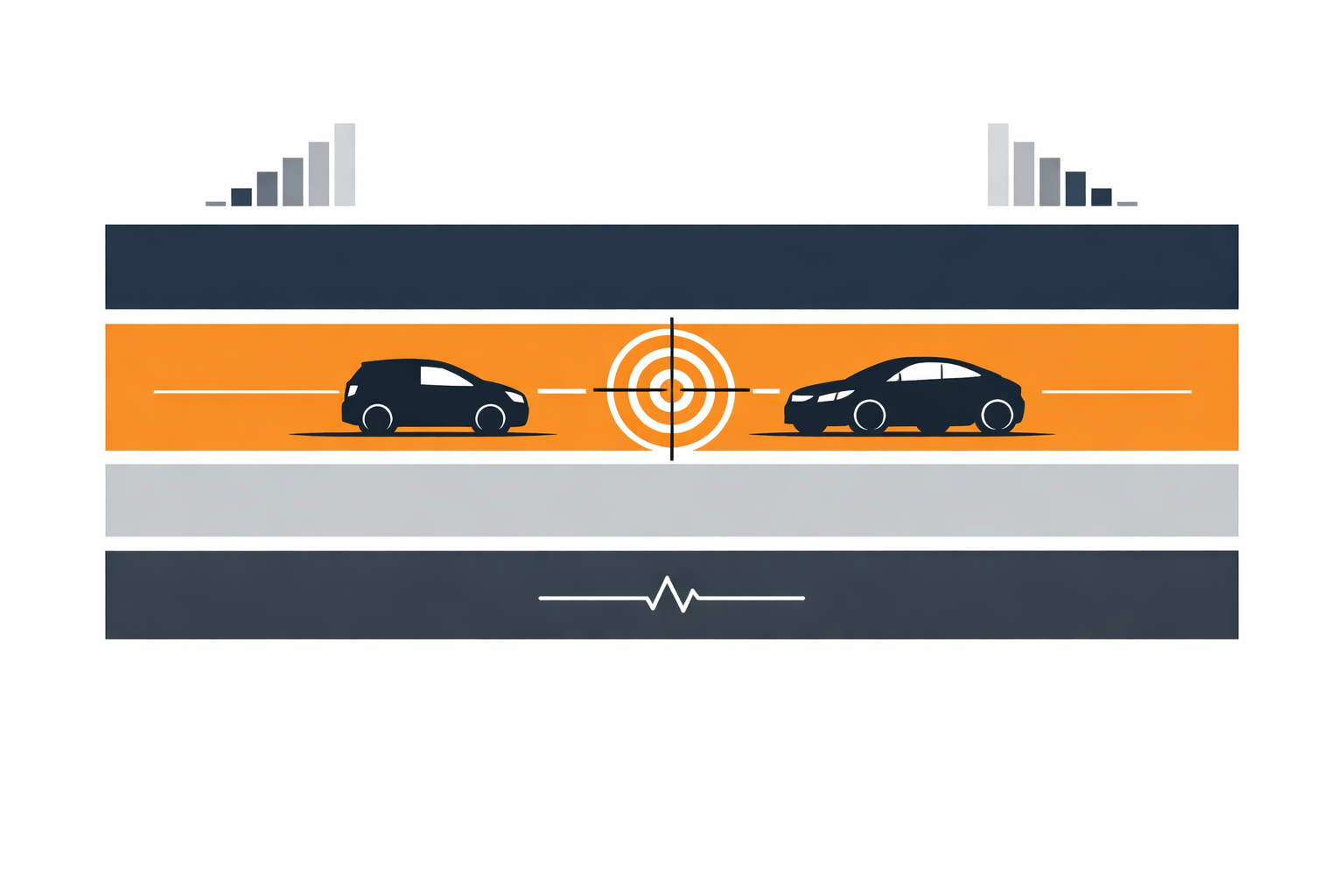
In today’s used-EV market, there is a band where inventory tends to behave more like true retail inventory and less like a specialty edge case.
That band is usually where affordability, consumer familiarity, and financing reality start to overlap.
This is where operators tend to find the best combination of:
- buyer pool depth
- pricing clarity
- acceptable ownership risk
- more reliable turn potential
That does not mean every unit in that range wins.
It means the market depth is more real.
When stores stay close to this liquidity band, they usually reduce the number of EVs that need explanation before they can even be considered.
The EV Dead Zone
There is also a middle zone where many EVs get trapped.
This is the range where a vehicle is too expensive to feel like a true affordability play, but not compelling enough to win against stronger EV nameplates or more trusted alternatives.
That creates one of the most dangerous conditions in used-car retail:
the illusion of demand.
The unit gets some views. Maybe a few leads. Maybe a little interest.
But it does not convert.
That is where stores get stuck, making small adjustments, hoping activity turns into movement.
Usually, it does not.
That is the dead zone.
Get the PPO Brief Every Monday
The Profitable Pre-Owned Brief delivers weekly used-car market intelligence for operators who want sharper signals and better inventory decisions.
Subscribe to the PPO BriefEV Buyers Need More Than Price
Another reason EVs do not follow a normal pricing curve is that the buyer is not evaluating price alone.
The buyer is also evaluating:
- battery condition risk
- range expectations
- charging fit
- ownership confidence
- model familiarity
- how the vehicle compares to Tesla alternatives
That means a weak listing can destroy demand even when the price is close.
If your merchandising does not reduce uncertainty, the buyer does not interpret the car as value.
The buyer interprets it as risk.
That is a completely different pricing environment than ICE.
What Winning Stores Do Differently
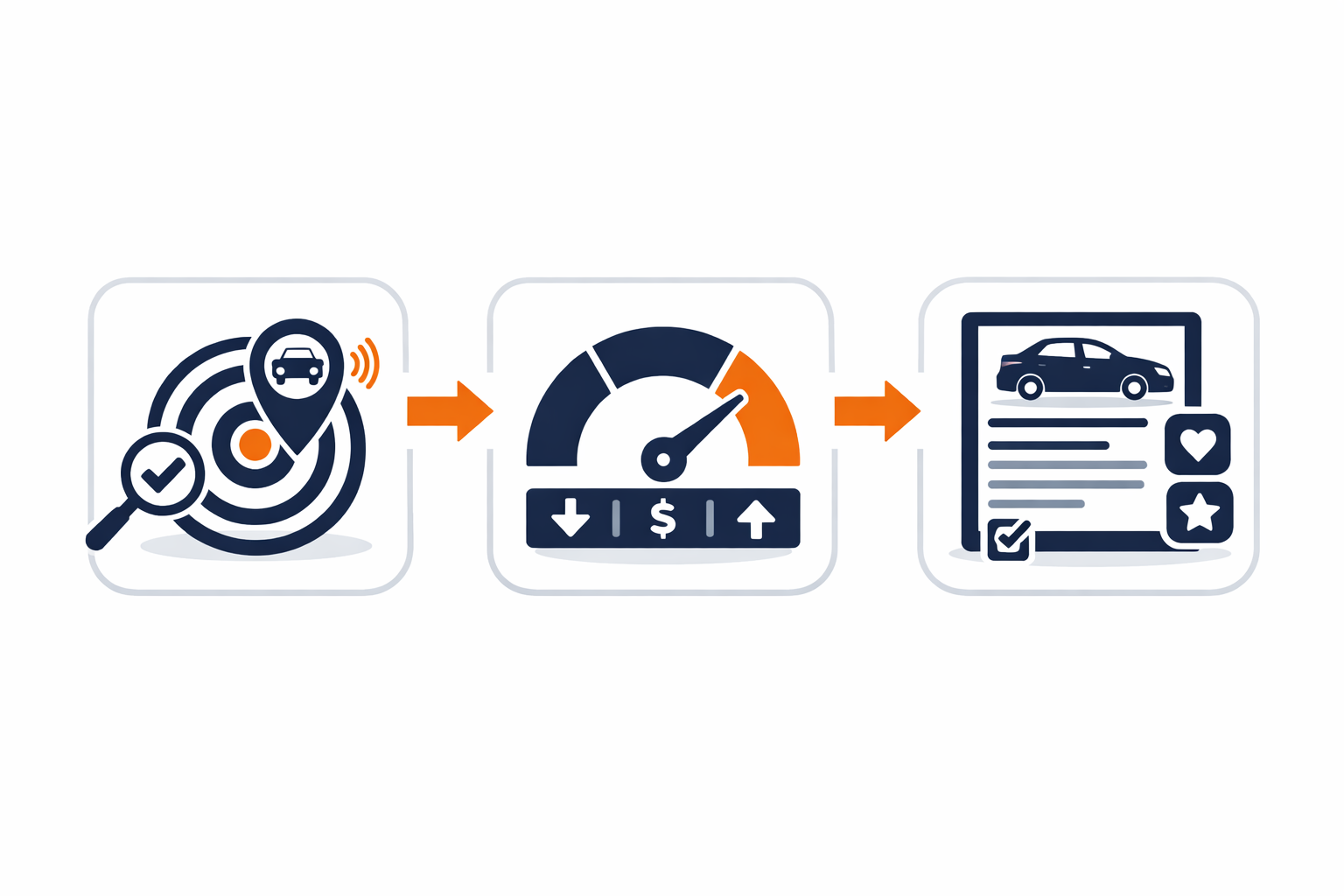
Stores that consistently move EV inventory are usually doing three things better than everyone else.
1. They buy with more precision
They do not buy EVs just because they look cheap relative to the market. They buy with a tighter view of who the buyer is, how the unit will be compared, and where it fits in the demand window.
2. They price decisively early
They do not stair-step into the market over weeks. They make a sharper decision earlier, while the vehicle still has time, freshness, and story on its side.
3. They merchandise for trust
They do not present EVs like generic used cars. They reduce buyer uncertainty with better context, clearer information, and more confidence-building presentation.
The Operator Takeaway
If you are still treating EV pricing like ICE pricing, you will continue to misread what the market is telling you.
EVs do not always need a lower price.
Sometimes they need a different position.
Sometimes they need stronger merchandising.
Sometimes they needed a better buy decision before they ever hit the lot.
That is the real shift.
EV performance is not just about price.
It is about whether the unit enters the market inside a narrow demand window while trust, value, and urgency still align.
That is why EVs do not behave like a normal pricing curve.
They behave like a window.
Want the Full Operator Framework?
If you are working through used-EV pricing, sourcing, and inventory execution, get the Used EV Operator Playbook.
And if you want a practical execution tool to tighten your inventory decisions faster, download the 7-Day Inventory Sprint.
.png)
-1.png)