
-4.png)
Profitable Pre-Owned Market Signal
Amazon Quietly Stepped Into Auto Supply Chains
Amazon’s new Supply Chain Services platform is not just a logistics story. For used-car operators, it is a signal about parts availability, recon speed, and the next layer of inventory execution.
Most dealers probably missed this story.
Fuel prices were grabbing headlines. Retail demand was getting most of the attention. And Amazon’s announcement sounded like something built for enterprise logistics teams, not used-car managers.
But this one matters.
Amazon quietly stepped into the supply chain layer that affects how quickly cars get through recon and back to retail.
Last week, Amazon launched Amazon Supply Chain Services, a logistics platform that allows outside companies to use Amazon’s freight, warehousing, fulfillment, and parcel-delivery network.
Automotive was specifically identified as a target sector.
That does not mean your parts department is switching to Amazon tomorrow.
But it does mean another major player is moving into the infrastructure behind parts movement, supplier fulfillment, and logistics efficiency.
Why This Matters to Used-Car Operators
Used-car profitability is not only decided at acquisition.
It is also decided in the days after acquisition.
A vehicle can be bought right and still lose momentum if it sits waiting on parts, approvals, or recon completion.
That matters even more in today’s used-car market because many stores are relying on older, higher-mileage inventory to hit affordability bands.
Older inventory can work.
But only if the store can control the operational drag that comes with it.
- parts delays
- reconditioning bottlenecks
- slow internal approvals
- missed retail-ready dates
- aging inventory before the vehicle is truly online-ready
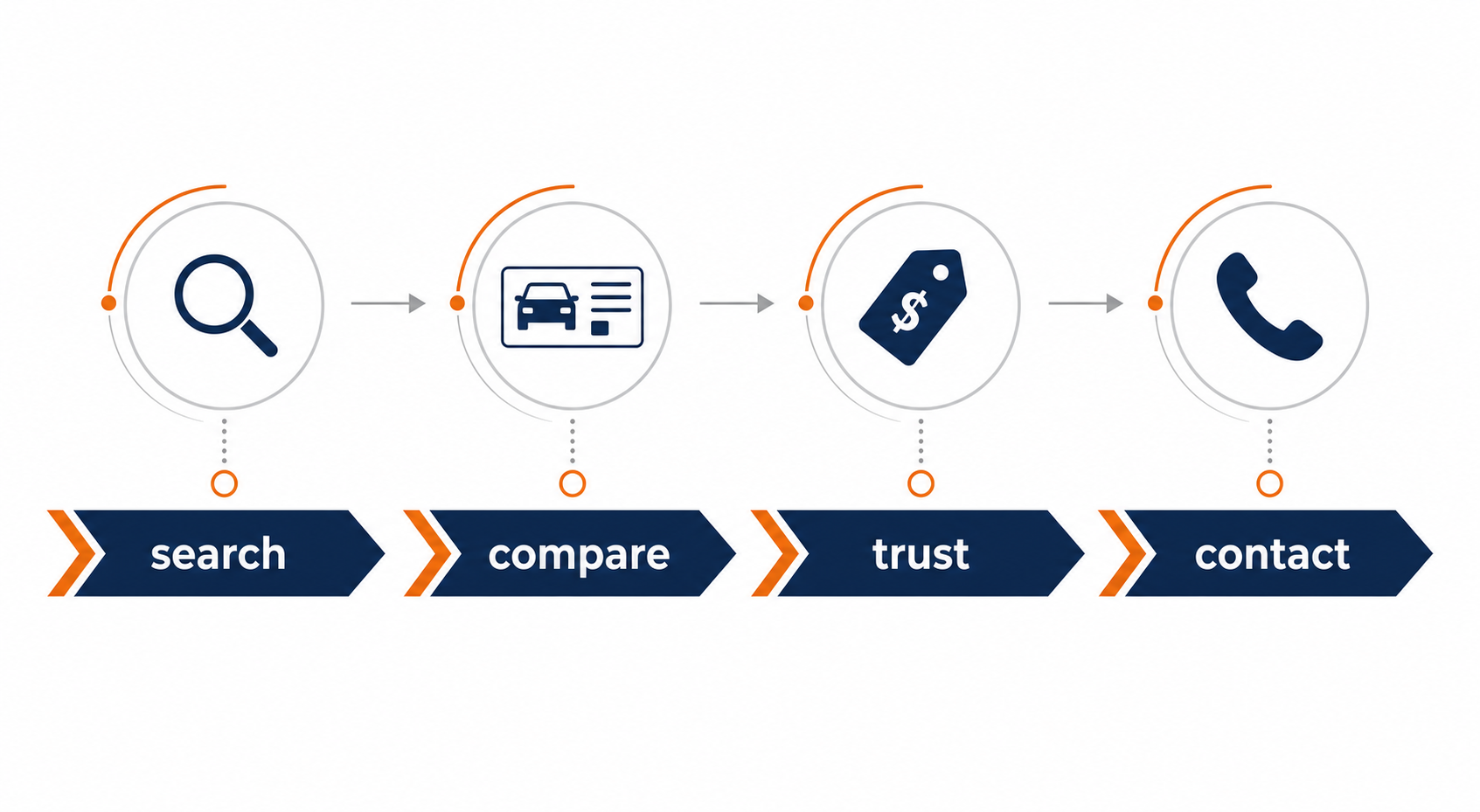
If Amazon’s logistics network eventually creates faster fulfillment options for OEMs, aftermarket suppliers, or parts distributors, that could change how quickly some stores can move units from acquisition to retail.
What Changed
Amazon is opening more of its logistics infrastructure to outside businesses.
That includes transportation, warehousing, distribution, fulfillment, and parcel delivery.
The platform is being positioned as a business-to-business logistics service, not just an Amazon seller tool.
The reported scale is significant:
- more than 80,000 trailers
- 24,000 intermodal containers
- more than 100 aircraft
- ocean, air, ground, and rail freight capabilities
- warehousing and fulfillment support
The immediate market reaction was sharp. Logistics stocks sold off as investors weighed whether Amazon could become a larger competitor to UPS, FedEx, freight brokers, and third-party logistics providers.
Analysts also cautioned that automotive logistics is complicated, especially when it comes to just-in-time expectations, supplier relationships, and parts-specific execution.
That is the right frame.
This is not a magic bullet.
It is a signal.
Get the Profitable Pre-Owned Brief
Weekly market signals for used-car operators — built to help you read demand, protect gross, and make better inventory decisions.
If you want practical operator-level insight instead of recycled industry headlines, subscribe to the PPO Brief.
Subscribe to the PPO BriefWhat to Watch
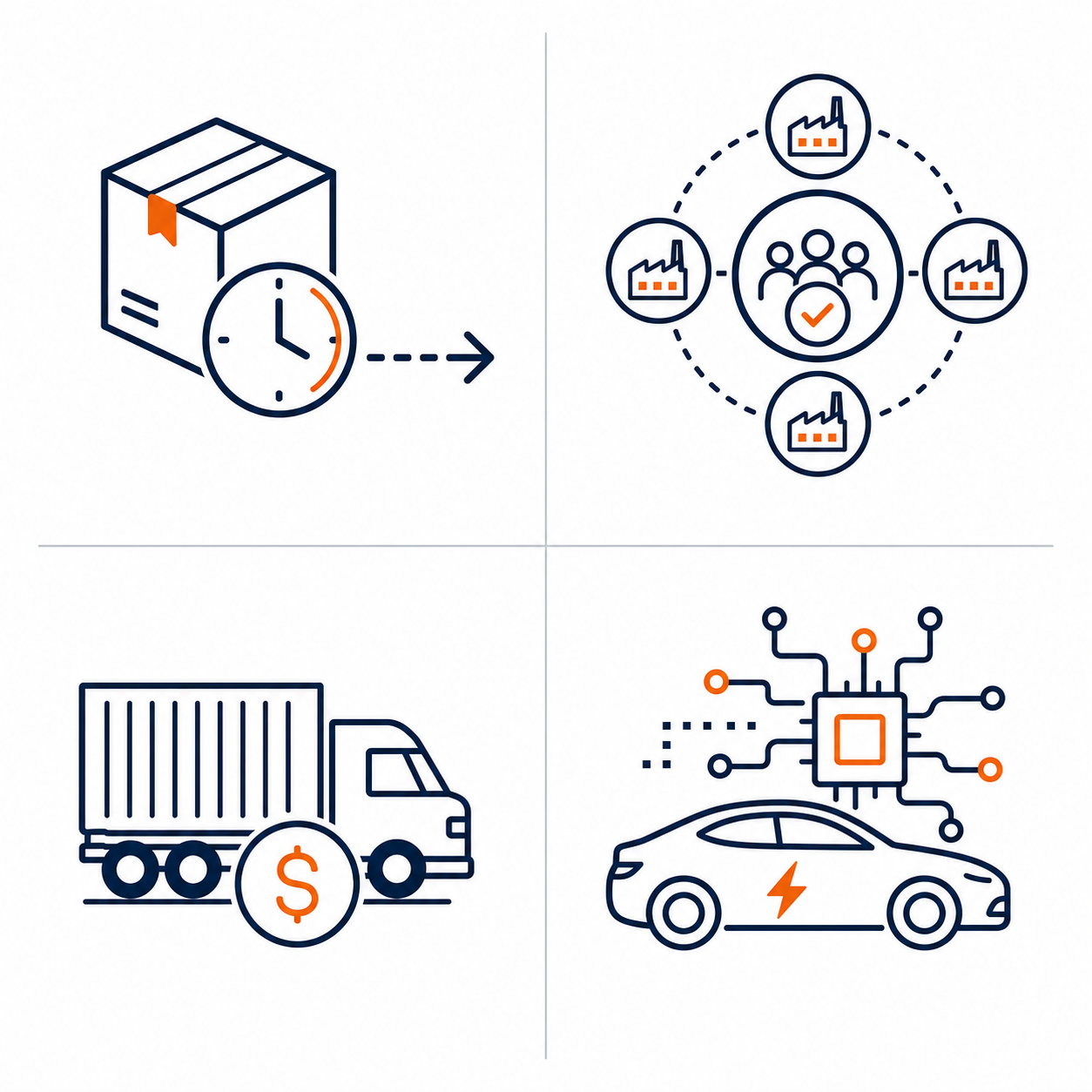
1. Parts lead times
If Amazon’s network can shorten the path between suppliers, distributors, and service departments, parts availability could become more fluid.
That would matter most for stores where recon aging is one of the biggest turn killers.
2. Parts costs
Faster fulfillment is one thing.
Lower landed cost is another.
Operators should watch whether suppliers using Amazon’s logistics network can reduce friction, improve reliability, or pass along savings.
3. OEM and tier-one adoption
The next real signal will be whether automakers, tier-one suppliers, or major aftermarket parts players adopt the platform.
If adoption stays limited to general retail and consumer brands, the dealer impact may be modest.
If automotive suppliers begin using the network at scale, the story changes.
4. EV and software-defined vehicle supply chains
EVs and software-defined vehicles add more complexity to the parts and service ecosystem.
Battery components, electronic modules, sensors, software-related hardware, and specialized parts all create new logistics pressure.
Amazon’s data-driven logistics tools could eventually become useful in that environment, but automotive complexity may slow the near-term impact.
The Operator Shift
This is not an invitation to jump ship from your current parts suppliers tomorrow.
It is a reminder that supply-chain efficiency is becoming a used-car advantage.
Dealers who track inbound lead times, diversify parts sources, and know where recon is getting stuck will be better positioned when cost pressure rises.
Think of Amazon as a potential lever, not a magic bullet.
How to Move Now
- Audit your parts procurement.
Identify which parts take the longest, cost the most, or create the most recon delays. - Track inbound lead times.
If you are not measuring how long parts take to arrive, you are guessing at one of the biggest causes of recon drag. - Talk to suppliers.
Ask whether they are exploring Amazon Supply Chain Services or similar logistics partnerships. - Separate parts delays from process delays.
Not every recon problem is a supplier problem. Some stores lose time because approvals, inspections, and internal handoffs are not disciplined. - Stay focused on acquisition.
Supply-chain improvement matters, but only if the store is buying the right cars in the first place.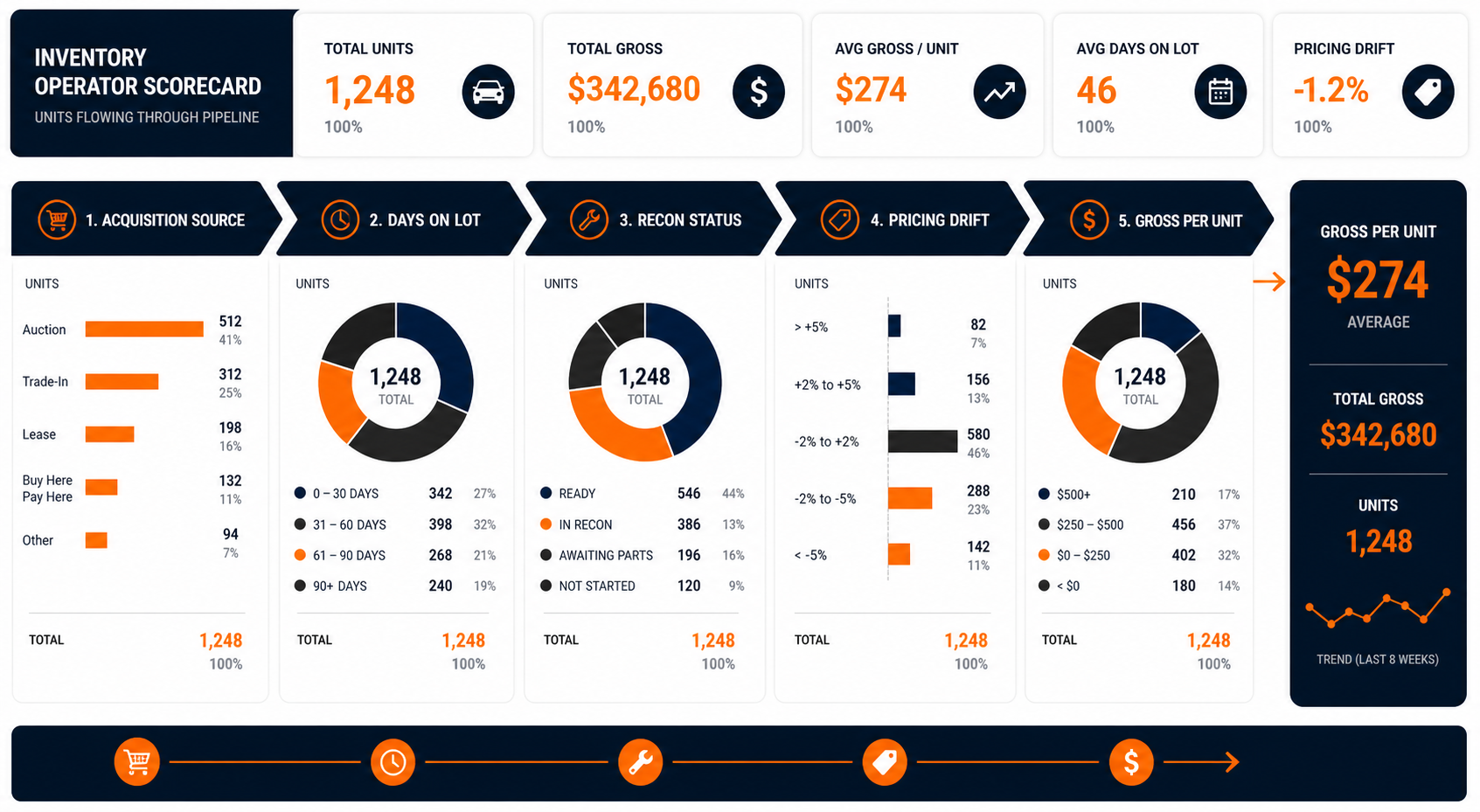
7-Day Sprint Companion Tracker
Every Store Has a Different Bottleneck
We’re building a companion tracker landing page for the 7-Day Inventory Sprint.
The goal is simple:
Help each store identify where inventory is actually getting stuck.
The tracker will let operators log each unit’s acquisition source, days on lot, reconditioning status, and gross per unit.
It will help visualize where inventory stalls:
- buy box misalignment
- aging reconditioning
- pricing drift
- slow turn
- merchandising gaps
That matters because most operators apply the same fix to every store.
But one store may have a sourcing issue. Another may have a recon delay. Another may have a pricing or merchandising problem.
The companion tracker is being built to show the specific part of the process that needs attention, so the Sprint creates lasting change instead of a temporary cleanup.
Early Access Invitation
Want early access to the 7-Day Sprint Companion Tracker?
We’re building the tracker to help stores identify where inventory is actually getting stuck — acquisition, recon, pricing, merchandising, or slow turn.
If you want the early access link when it goes live, sign up for the Profitable Pre-Owned Brief.
Sign Up for the PPO BriefBottom Line
The Memorial Day holiday may have delayed the Brief, but the market did not pause.
While fuel prices grabbed headlines, Amazon quietly moved deeper into logistics infrastructure that could eventually affect how parts move through the automotive ecosystem.
For used-car operators, the lesson is not to overreact.
The lesson is to pay attention.
Parts availability, recon speed, acquisition discipline, and inventory turn are connected.
The stores that understand those connections will be better positioned when cost pressure rises.
Supply-chain efficiency is becoming part of inventory strategy.
And the operators who see that early will have the advantage.
Source note: This post is based on recent reporting about Amazon Supply Chain Services and its move to open Amazon’s logistics network to outside businesses. Add source link here: Read the source article